

Contents
When entering the US market, entrepreneurs usually deal not only with US state for company setup, but also with choosing the right corporate structure, tax model, share distribution between founders and investors, and dividend distribution mechanisms. This stage lays the foundation for the company’s future operations, and mistakes in the initial structure may later create tax, banking, and operational risks.
Another important step after company incorporation is opening a corporate U.S. bank account. For most US companies, a business account is the basis of daily operations: receiving payments from clients, working with Stripe, Amazon, Shopify, and international counterparties, processing payroll, and maintaining financial records.
At the same time, opening a business account for a US company is not always straightforward, especially when the founders are non-US residents. American banks and financial institutions pay close attention to compliance procedures, the business structure, source of funds, type of activity, and real business presence. In some cases, banking compliance requirements may even influence the company’s structure, shareholder composition, or operational model.
Today, a US business account can be opened through traditional American banks as well as modern fintech and payment solutions designed for international businesses. The right option depends on the company’s business model, customer profile, payment geography, need for Stripe integration, and tax and corporate structure.
In this article, we will cover:
– whether a US company with non-resident founders can open a US business bank account;
– which banks and payment systems are available for U.S. companies;
– when physical presence may be required;
– which documents banks usually request;
– which risks and limitations should be considered before registering a company in the USA?
Why does a company need a corporate account in the USA?
Before opening an account, the first step is to define what the business needs it for.
The main function of a corporate account is to manage payments with counterparties: receiving payments from clients, paying contractors, covering procurement and operating expenses, and handling other business transactions. For some companies, access to physical or virtual corporate cards is also important for paying for advertising, SaaS tools, subscriptions, logistics, and other recurring expenses.
Depending on the bank or payment institution, corporate accounts may also offer additional financial features. For example, some U.S. banks allow companies to earn interest on account balances, open a line of credit, or use an overdraft facility. These options may be important for businesses that need greater liquidity flexibility or to cover short-term cash flow gaps.
It is also important to consider the type of payment details available. For domestic payments in the USA, ACH details are commonly used. They are suitable for local transfers, payroll, bill payments, and other payments within the country. For international or interbank transfers, wire transfer details or SWIFT details may be required.
Understanding these differences helps businesses organize payment processes correctly and avoid transaction delays. For example, some payment solutions allow a US company to open an account but do not always enable it to accept payments directly from individuals without a merchant provider such as Stripe.
That is why, before submitting an application, it is worth defining how the company will receive funds, who it will pay, and whether it needs cards, international payment details, Stripe integration , or other payment tools. This helps choose the most suitable solution and, where necessary, adapt the corporate structure to the requirements of the bank or payment institution.
Recommended article
Bank or payment system: which option should you choose for a US account?
Once a company has defined what it needs a corporate account for, the next step is to choose the right financial solution. For a U.S. company, this may be a traditional bank, a fintech solution, or a payment system. Each option has its own advantages, limitations, and requirements.
Traditional banks in the USA usually offer a wider range of financial services, including corporate accounts, lines of credit, overdrafts, deposit products, cards, and other banking tools for businesses. Some of the most well-known banks include JPMorgan Chase, Bank of America, and Citibank. These banks have strong reputations and may be suitable for companies that need stability, full banking functionality, and cooperation with large counterparties.
At the same time, traditional banks often have stricter onboarding requirements. They may request detailed documentation on the business model, sources of income, ownership structure, beneficial owners, and the company’s connection to the USA. In some cases, the bank may require the physical presence of a founder or director, which can make the process more difficult for non-residents.
Fintech solutions and payment systems may serve as an alternative, such as Mercury, Wise, or Payoneer account. These providers often allow companies to open accounts remotely, complete onboarding more quickly, receive payment details, and work more conveniently with international clients. For non-residents, this is often a more practical option, especially if the company needs basic payment tools, marketplace integration, or access to international platforms.
However, fintech solutions also have limitations. They may not support certain types of transactions, currencies, business activities, or payments from individuals without an additional merchant provider. Therefore, before choosing a payment system, it is important to check not only whether an account can be opened, but also whether its functionality matches the company’s actual business model.
Before making a final decision, it is worth assessing the following criteria:
– available functionality: checkout, currency conversion, account statements, invoice generation, and payment automation;
– supported operations: ACH, wire, SWIFT, B2B, or B2C payments;
– payment details provided by the bank or payment system;
– supported currencies;
– fees for account opening, maintenance, and payments;
– requirements for the business, UBOs, and beneficiaries’ residency;
– permitted and restricted business activities;
– availability of physical or virtual corporate cards;
– compatibility with Upwork, Amazon, Etsy, Stripe, PayPal, QuickBooks, Xero, or other required services.
It is also important to note that some payment systems may provide payment details through partner banks.
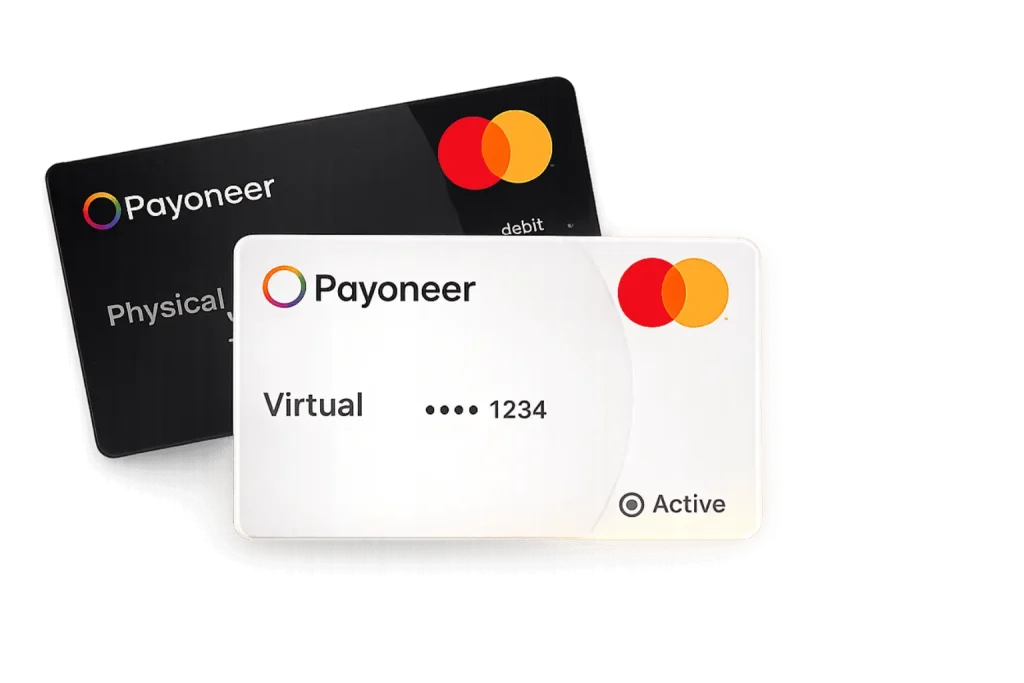
For example, Payoneer may provide clients with Citibank payment details for local and cross-border payments. This does not mean that a full bank account is opened directly with Citibank, but it may be a convenient solution for receiving and sending payments.
The main advantages of fintech solutions for non-residents are remote account opening, faster onboarding, a simpler interface, accessibility for international businesses, and convenience for daily payments. At the same time, traditional banks may be a better choice for companies that need credit products, broader banking functionality, or a long-term reputational presence in the USA.
The right choice of bank or payment institution affects not only the convenience of daily operations, but also the level of compliance risk. A mismatch between the company’s business model and the financial institution's requirements may result in account opening refusal, blocked transactions, or service termination.
Recommended article
What documents are needed to open a US business bank account for an LLC?
After choosing a bank or payment system, the next stage is the compliance review. At this stage, the bank or fintech provider evaluates not only the company itself but also its owners, business structure, funding sources, and the legitimacy of its operations.
All U.S. banks and payment systems use AML/KYC procedures to verify clients. As part of these checks, the financial institution may review the company’s ownership structure, business model, source of funds, sanctions exposure, and the PEP (politically exposed person) status of its beneficial owners.
As a result, businesses are usually expected to provide:
– company registration documents;
– EIN (Employer Identification Number);
– an Operating Agreement for an LLC or Bylaws for a Corporation;
– passports or IDs of founders and directors;
– SSN or ITIN, if available;
– proof of residential address;
– a description of the company’s business model;
– information about clients, contractors, suppliers, and sources of incoming funds.
This stage should be taken seriously. The more transparent, structured, and understandable the information provided to the bank is, the higher the chances of account approval.
If the company has already signed contracts, invoices, or memorandums of cooperation, it is advisable to prepare them in advance. If the business is still at an early stage, it is worth preparing a list of potential clients, explaining the monetization model, and describing the specific services or products the company plans to sell.
Banks also often pay attention to the company’s digital presence. A corporate website, a company LinkedIn page, active social media profiles, or publicly available information about the team may positively influence the compliance review. It may also be an advantage if the founders or management publicly indicate their connection to the company on LinkedIn or other professional networks.
Banks also assess the company’s substance, meaning its real economic presence. This is especially relevant for U.S. companies owned by non-residents. In practice, the bank checks whether the company is a genuine operating business rather than a formal “shell” with no real activity.
By economic substance, banks may mean:
– a physical office;
– employees or management in the USA;
– local contractors;
– U.S.-based clients;
– real business operations that correspond to the company’s declared activity.
If the company can provide evidence of its activity in the country, and a company representative can confirm their residence in the USA and visit the bank in person, the chances of opening a U.S. business account with a traditional bank are relatively high.
That is why businesses should think through their corporate structure before applying for an account. In practice, banks tend to view the following more positively:
– a transparent ownership structure without unnecessary layers of companies;
– no nominee directors, or a clear explanation of why they are used;
– economic substance in the USA;
– a clear logic behind the movement of funds;
– a realistic operational business model.
For example
If a company provides services, the bank may assess whether the business has enough employees or contractors to deliver the declared scope of work. If the company works with intellectual property, it is important that the IP rights belong to the company itself or are properly licensed. Situations where IP formally belongs to an individual while the company receives the income may be viewed by banks as a higher compliance risk.
Fintech requirements are usually less strict than those of traditional banks. However, fintech companies also follow AML/KYC procedures and apply their own risk assessment policies. Some payment systems may be more flexible with non-residents or Ukrainian founders, while others may require additional checks or refuse to open accounts for certain categories of clients or businesses.
For example, Mercury has publicly reported restrictions for US companies whose founders are Ukrainian citizens and cannot confirm residence in another supported country. In 2024, the company notified clients about the termination of some accounts in such cases. At the same time, Mercury stated that it may work with Ukrainians residing in the USA or other supported jurisdictions.
This case shows that even fintech solutions with remote onboarding may have their own compliance restrictions, which directly affect both the ability to open an account and the possibility of maintaining it in the future.
Why can a US account application be rejected?
Rejection of a corporate account application in the USA is quite common, especially for companies with non-resident owners. In most cases, the reason is not the company’s country of origin itself, but the compliance risks identified by the bank or payment system.
The most common reasons for rejection may include:
– a non-transparent ownership structure;
– lack of economic substance or a clear business connection to the USA;
– an unclear business model;
– no website, public information, or digital presence;
– high-risk business activity;
– transactions involving sanctioned jurisdictions;
– difficulties confirming the source of funds;
– use of nominee directors or complex corporate structures;
– a mismatch between the declared business activity and the company’s actual operations.
It is also important to consider that fintech providers and banks may have their own internal policies regarding founders' citizenship or country of residence. Even if the business is fully legal, a financial institution may reject the application due to its internal risk policy or provider-specific restrictions.
Preparation for opening a U.S. account does not begin with submitting an application. It starts earlier, at the stage of company structuring, document preparation, and choosing the right financial solution for the specific business model.
Recommended article
Conclusion
Opening a corporate account for a U.S. company is not a formality but a separate strategic stage that requires preparation and a clear understanding of banks' and payment systems' requirements. Despite the wide range of available solutions, from traditional banks to modern fintech providers, there is no universal option that suits every business.
The key factors for successful account opening are usually a transparent company structure, economic substance, and compliance with AML/KYC requirements. These are the aspects banks and payment institutions assess during compliance reviews, and they often determine the final decision on account approval and further servicing.
Fintech solutions can significantly simplify the process of opening an account for a U.S. company, especially for non-residents. At the same time, they also have their own limitations related to jurisdiction, business activity, or internal compliance policies. Traditional U.S. banks, in turn, offer broader banking functionality and stability, but often require deeper preparation and a clear connection between the company and the USA.
Therefore, the answer to the question “Is it possible to open an account in the USA?” is yes, but only with proper business preparation and the right financial solution selected at the company structuring stage.
The WoBorders team helps entrepreneurs with company formation in the USA, selecting banking and fintech solutions, opening corporate accounts, and preparing for AML/KYC checks. We are official Payoneer partners and help choose the most suitable payment solution depending on the business model, customer type, jurisdiction, and required functionality.
You can contact us through the website form, email, Telegram, or WhatsApp. We work Monday to Friday, from 09:00 to 18:00 Kyiv time, and will be happy to help you launch and build the financial infrastructure for your US company.
FAQ about opening an account in the USA
Can a non-resident open a business account in the USA?
Yes, a non-resident can open a corporate account for a U.S. company through a bank or fintech provider. However, the requirements depend on the business structure, the founders’ country of residence, and the company’s type of activity.
Can a US business account be opened remotely?
Yes, many fintech providers allow companies to open an account remotely without visiting the USA. However, banks and payment systems still conduct AML/KYC checks and may request additional documents.
Is an SSN or ITIN required to open an account?
Not always. Some fintech providers allow account opening without an SSN or ITIN, while traditional banks may require them depending on the company's structure and the founders’ status.
What documents are required to open a corporate account in the USA?
Typically, banks or payment systems request company registration documents, an EIN, a passport of the founder or director, proof of residential address, and a description of the business activity.
Is physical presence in the USA required?
For fintech solutions, not always. However, many traditional banks may require a personal visit from the founder or director to open the account.
What is AML/KYC?
AML/KYC refers to client verification procedures used by banks and payment systems to assess the business structure, source of funds, and compliance risks.
What is economic substance?
Economic substance means proof that the company conducts real business activity. Banks may assess whether the company has an office, employees, clients, or operational presence in the USA.
Why can a U.S. business account application be declined?
The most common reasons include a non-transparent company structure, lack of economic substance, high-risk business activities, AML/KYC concerns, or a mismatch between the business model and the bank or fintech provider's requirements.
What is better for a non-resident: a bank or a fintech solution?
Fintech solutions often make remote account opening easier and onboarding faster. Traditional banks may offer broader functionality, but they usually have stricter compliance requirements.
Does WoBorders help with opening a U.S. business bank account for non-residents?
Yes, the WoBorders team helps with company registration in the USA, selecting banking and fintech solutions, preparing AML/KYC documentation, and opening corporate accounts for non-residents.
Disclaimer
The information provided in this article is for informational purposes only and does not constitute tax, legal, or accounting advice. Although we strive to ensure the accuracy and relevance of the material, U.S. tax and corporate regulations may change, and their application depends on the specific circumstances of each company.
Before making any decisions regarding company formation, accounting practices, tax reporting, or the sale of goods and services in the U.S., we recommend obtaining individualized advice from a qualified tax professional, CPA, or licensed attorney in the relevant jurisdiction.