

Contents
The tax system of the United States is one of the most complex and at the same time one of the most structured in the world. It combines federal, state, and local levies, which may differ significantly depending on the jurisdiction, business structure, and type of taxpayer. For companies, this means that planning must account for not only federal rules, but also the specific features of a particular state, including rates, the procedure for calculating the base, benefits, and filing requirements. Taxes in the USA for companies depend on the business structure, the state of registration, and the type of activity. In this article, we will consider what a company pays in the USA, how business taxation works, and what residents and non-residents should take into account.
The first important point that distinguishes the USA from many other countries is the multi-level structure of the fiscal system. In the USA, obligations may arise at three levels: federal, state, and local — that is, at the level of a city or county.
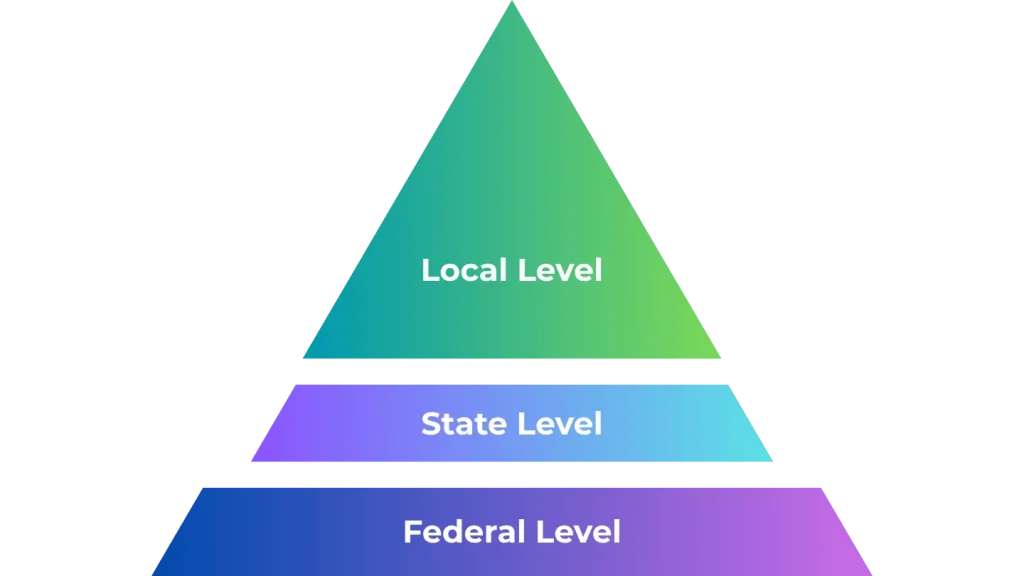
At these levels, a business may face Corporate Income Tax, Individual Income Tax, and in the case of the sale of goods or certain services, also Sales Tax, Use Tax, and, in certain cases, excise duties. In addition to income or profit levies, many states have mandatory annual fees, which are often combined under the general name Franchise Tax. Their logic, name, and calculation procedure differ depending on the state, but the general principle is the same: this is a payment for the right of a company to exist or conduct activities in the relevant jurisdiction.
Next, we will consider the main types separately and explain in which cases and for which types of companies the relevant obligations may arise.
Recommended article
Corporate Income Tax in the U.S.
Corporate Income Tax in the USA has a two-level structure: a company's profit may be subject to both federal and state-level charges. For this reason, the actual burden on a business depends not only on the company's legal form, but also on the state in which it is registered or conducts activities. Corporate income tax is one of the key elements shaping the overall fiscal obligations of a company in the USA. It is generally paid by companies with a corporate model — in particular C-Corporations, as well as LLCs that have elected to be treated as a corporation.
The federal Corporate Income Tax rate is 21%. Taxable income is subject to this charge — profit determined as the company's revenue minus allowable expenses, taking into account the general rules of adjustments. In order to be deductible, business expenses must be ordinary and necessary, meaning typical for the relevant activity and reasonably required for conducting business.
Most states also establish their own Corporate Income Tax.The rules for determining taxable profit, the existence of rates, their size, and structure may differ significantly depending on the jurisdiction. Therefore, when choosing a state for registration or conducting activities, it is important to assess not only the formal rate but also the overall fiscal model in that state.
Corporate Income Tax Rates in US States (2026)
Below are the indicative Corporate Income Tax rates in US states as of 2026.
| State | CIT Rate | State | CIT Rate |
|---|---|---|---|
| Alabama | 6.5% | Montana | 6.75% |
| Alaska | 2%–9.4% | Nebraska | 4.55% |
| Arizona | 4.9% | Nevada | None |
| Arkansas | 1%–4.3% | New Hampshire | 7.5% |
| California | 8.84% | New Jersey | 6.5%–11.5% |
| Colorado | 4.4% | New Mexico | 5.9% |
| Connecticut | 7.5%–8.25% | New York | 6.5%–7.25% |
| Delaware | 8.7% | North Carolina | 2% |
| District of Columbia | 8.25% | North Dakota | 1.41%–4.31% |
| Florida | 5.5% | Ohio | None |
| Georgia | 5.19% | Oklahoma | 4% |
| Hawaii | 4.4%–6.4% | Oregon | 6.6%–7.6% |
| Idaho | 5.3% | Pennsylvania | 7.49% |
| Illinois | 9.5% | Rhode Island | 7% |
| Indiana | 4.9% | South Carolina | 5% |
| Iowa | 5.5%–7.1% | South Dakota | None |
| Kansas | 4%–7% | Tennessee | 6.5% |
| Kentucky | 5% | Texas | None |
| Louisiana | 5.5% | Utah | 4.5% |
| Maine | 3.5%–8.93% | Vermont | 6%–8.5% |
| Maryland | 8.25% | Virginia | 6% |
| Massachusetts | 8% | Washington | None |
| Michigan | 6% | West Virginia | 6.5% |
| Minnesota | 9.8% | Wisconsin | 7.9% |
| Mississippi | 4%–5% | Wyoming | None |
| Missouri | 4% |
Notes:
– In Colorado, the 4.4% rate may be reduced mid-year depending on the state's budget performance.
– In Connecticut, an additional 10% surtax applies to companies with gross revenue of USD 100 million or more. This mechanism has currently been extended until January 1, 2029.
– Nevada, Ohio, Texas, and Washington do not levy Corporate Income Tax, but they apply other charges, including gross receipts levies, which are not a direct equivalent of an income-based charge.
– Delaware, Oregon, Tennessee, Pennsylvania, Virginia, and West Virginia impose gross receipts fees or similar charges in addition to corporate income tax.
– In Illinois, the effective rate consists of two separate charges: 7% base corporate income tax and 2.5% personal property replacement tax.
As a result, a standard C-Corporation pays 21% federal corporate income tax plus state-level charges. Upon distribution of dividends to the business owner, withholding applies, typically 30% for non-residents, which may be reduced under a double taxation treaty.
Individual Income Tax in the U.S.
Individual Income Tax in the USA applies to the income of individuals and, as with corporate obligations, may be levied at two levels: federal and state. At the federal level, the United States applies a progressive rate scale: the higher the income, the higher the rate.
Below is the indicative federal Individual Income Tax scale as of 2026.
| Tax Rate | Income Level |
|---|---|
| 10% | from $0 to $12,400 |
| 12% | from $12,401 to $50,400 |
| 22% | from $50,401 to $105,700 |
| 24% | from $105,701 to $201,775 |
| 32% | from $201,776 to $256,225 |
| 35% | from $256,226 to $640,600 |
| 37% | more than $640,601 |
Individual Income Tax in the USA may also be levied at the state level. In its logic, it is similar to the federal personal income tax; however, the revenue from it is allocated to the budget of the respective state rather than to the federal budget. The approach to such taxation varies among states: progressive or flat rates may be applied, and in certain jurisdictions this tax is not imposed at all.
Below are the indicative rates as of 2026.
| State | Tax Rate | State | Tax Rate |
|---|---|---|---|
| Alabama | 2%–5% | Montana | 4.7%–5.9% |
| Alaska | No tax | Nebraska | 2.46%–5.2% |
| Arizona | 2.5% | Nevada | No tax |
| Arkansas | 2%–3.9% | New Hampshire | No tax |
| California | 1%–13.3% | New Jersey | 1.4%–10.75% |
| Colorado | 4.4% | New Mexico | 1.5%–5.9% |
| Connecticut | 2%–6.99% | New York | 4%–10.9% |
| Delaware | 2.2%–6.6% | North Carolina | 4.25% |
| District of Columbia | 4%–10.75% | North Dakota | 1.95%–2.5% |
| Florida | No tax | Ohio | 2.75%–3.5% |
| Georgia | 5.39% | Oklahoma | 0.25%–4.75% |
| Hawaii | 1.4%–11% | Oregon | 4.75%–9.9% |
| Idaho | 5.695% | Pennsylvania | 3.07% |
| Illinois | 4.95% | Rhode Island | 3.75%–5.99% |
| Indiana | 3% | South Carolina | 0%–6.2% |
| Iowa | 3.8% | South Dakota | No tax |
| Kansas | 5.2%–5.58% | Tennessee | No tax |
| Kentucky | 4% | Texas | No tax |
| Louisiana | 3% | Utah | 4.55% |
| Maine | 5.8%–7.15% | Vermont | 3.35%–8.75% |
| Maryland | 2%–5.75% | Virginia | 2%–5.75% |
| Massachusetts | 5%–9% | Washington | No tax* |
| Michigan | 4.25% | West Virginia | 2.22%–4.82% |
| Minnesota | 5.35%–9.85% | Wisconsin | 3.5%–7.65% |
| Mississippi | 4.4% | Wyoming | No tax |
| Missouri | 2%–4.7% |
Note:
* Washington does not impose personal income tax, but an additional 2.9% charge applies to capital gains exceeding the established threshold.
The most common company form in the United States among non-residents is a Single-Member LLC. By default, this structure does not pay at the company level — this occurs at the owner level. The LLC's profit is treated as the individual income of the owner and is calculated taking into account business expenses. Federal Individual Income Tax obligations may arise from this income and, under certain conditions, similar state-level obligations may also apply.
Recommended article
For non-residents, the key factor is the presence of Effectively Connected Income (ECI), which determines whether a U.S. liability arises. ECI generally arises where there is an actual presence or business activity in the United States — including an office, warehouse, employees, or other active operations. Income directly connected with activities conducted within the United States may also qualify as ECI. If ECI is absent, federal obligations may not arise. State-level obligations may still apply in certain cases, depending on the type of income, the jurisdiction, and the presence of activity in a particular state. In practice, the treatment of an LLC for non-residents always depends on the existence of ECI, the source of income, and the state of operation.
It is important to note that this material addresses company obligations specifically in the United States.
Owners of U.S. businesses who are fiscal residents of other countries may have additional obligations in their country of residence. For a comprehensive understanding of the overall burden, it is advisable to consider both jurisdictions.
For U.S. residents who own a Single-Member LLC and receive income from active business activities, Self-Employment Tax (15.3%) may additionally apply.
Interesting fact:
Almost half of private companies in the United States are classified as pass-through entities, including LLCs and S-Corporations. In these structures, the income tax is typically not paid by the company itself, but by its owner as an individual.
Franchise Tax in the U.S.
Franchise Tax in the U.S. is a distinct mandatory fee imposed on legal entities, including LLCs and corporations, for the right to exist and conduct business in a given jurisdiction. Unlike income-based charges, Franchise Tax often does not depend on the company's actual revenue, although the calculation method varies by state. Therefore, when analyzing what a company pays in the U.S., it is important to consider not only income-based charges but also mandatory annual fees. Typically, this fee is paid annually, often concurrently with the annual report.
The calculation method can differ significantly not only between states but also depending on the type of company within the same jurisdiction. For example, in Delaware, the amount for corporations can be determined using either the authorized shares method or the assumed par value capital methodThus, for companies, especially corporations, both the fact of registration and the capital structure and chosen calculation method are important.
In some states, the Franchise Tax or equivalent annual fee is relatively modest. For instance, in Wyoming, the annual report license fee starts at $60 for many companies, which is one reason for the jurisdiction's popularity among businesses entering the U.S. market.
It is important to note that even an LLC with no turnover may be required to pay such fees if mandated by the state of registration. If a company is registered in one state but operates in another, it may need to register there as a foreign LLC or foreign corporation and pay annual fees in both jurisdictions.
Sales Tax and Use Tax in the United States
Sales Tax and Use Tax are two related but distinct levies imposed at the state and local levels on the sale of goods and certain services. For LLCs and corporations, these are practically important because they affect not only the final price for the customer but also the business's compliance obligations.
– Sales Tax is effectively paid by the buyer when purchasing a product or service, while the seller acts as a collection agent: calculating, collecting, and remitting the amount to the government. Each state independently sets its base Sales Tax rate. Rates can range from 0% in certain jurisdictions — such as Oregon or Delaware — to 7.25% and higher, as in California. Additionally, most states also impose a Local Sales Tax, set at the county or city level.
– Use Tax to the use, storage, or consumption of goods and services purchased without Sales Tax. Its purpose is to ensure an equivalent burden regardless of where the product or service was purchased, within the state or from an out-of-state supplier.
Sales Tax and Use Tax are not income-based charges. The business's responsibility is to correctly determine liability, register on time, and accurately calculate, collect, and remit the required amount according to the rules of the specific state. A key concept here is nexus — the company's connection to a state that gives the state the right to require compliance. Nexus may arise through physical presence (an office, warehouse, employees, or store), or by meeting established thresholds for transactions or sales volume, known as economic nexus. If a company has a nexus in a state, it is generally required to collect Sales Tax and remit it to that state's treasury.
Payroll Taxes in the U.S.
Payroll taxes in the U.S. are assessed on employee wages and fall into two main categories: Social Security and Medicare, along with additional contributions such as unemployment insurance. Unlike income-based charges, these are withheld from employees' wages and remitted by the employer to the relevant authorities.
Employers are separately responsible for unemployment insurance contributions , Federal Unemployment Tax (FUTA) and State Unemployment Tax (SUTA), with rates varying depending on the jurisdiction and the nature of the business.
Main structure of U.S. Payroll Taxes
Rates are current for 2026 year
| Tax | Who Pays | Rate (2026) |
|---|---|---|
| Social Security Tax | Employer + Employee | 6.2% each (12.4% total) |
| Medicare Tax | Employer + Employee | 1.45% each (2.9% total) |
| Additional Medicare Tax | Employee | 0.9% for income above $200,000 |
| Federal Unemployment Tax (FUTA) | Employer | 6% on the first $7,000 of wages |
| State Unemployment Tax (SUTA) | Employer | 0.5%–6% depending on the state |
Tax benefits and structuring in the USA
We have reviewed the main charges that businesses face in the United States. However, the actual burden is often determined not so much by rates as by the business structure and the use of available planning tools. Evaluating a company's obligations in the U.S. should therefore consider not only base rates but also available planning mechanisms. The U.S. has a developed system of exemptions, deductions, and tax credits that can reduce taxable income or the total liability. These mechanisms apply both to individuals (Individual Income Tax) and to businesses (LLCs, corporations).
For example:
Amazon has at various times demonstrated an effective burden of approximately 12–20% due to significant operating expenses, investments, and depreciation.
Apple has long optimized its obligations through structuring income from intellectual property, including utilizing jurisdictions with lower rates.
Companies such as Netflix and Meta invest substantial funds in development, research, and AI, which allows them to benefit from available credits. Importantly, these approaches are legal and grounded in legislation.
For small and medium-sized businesses, proper structuring of operations and collaboration with accountants and advisors is crucial. This enables companies to leverage available optimization tools and reduce the overall burden on both the business and its owners..
Frequently asked questions about U.S. Taxes
Are taxes in the USA really high?
Not necessarily. The US tax system is progressive and depends on the type of income, the state, and the business structure. The federal corporate rate is 21%, often lower than in many European countries. In some cases, effective rates can be further reduced through expenses, deductions, and proper business structuring.
Can we say that rates are low in the U.S.?
Not exactly. Levels vary depending on the specific situation. For example, non-resident LLC owners may not owe U.S. obligations if they have no Effectively Connected Income (ECI), but they are still required to report income in their country of fiscal residence.
What taxes for business apply in the U.S.?
Depending on its structure and operations, a U.S. company may be subject to multiple charges: federal and state Corporate Income Tax, Franchise Tax, Sales Tax and Use Tax, as well as payroll obligations if it has employees. The exact mix depends on the state, type of activity, and business structure.
Does an LLC pay taxes in the U.S.?
By default, an LLC is a pass-through entity, meaning obligations are met at the owner level through Individual Income Tax rather than at the company level. For non-residents, the presence of ECI determines whether U.S. obligations arise.
Do non-residents have obligations in the U.S.?
It depends on the source of income and business activity. If income qualifies as ECI, the non-resident must meet U.S. obligations. If ECI is absent, federal charges may not apply, but reporting obligations remain in the country of residence.
Is business reporting complicated in the U.S.?
For basic cases, no. Standard structures have formalized, predictable requirements. Complexity increases with multiple income sources, employees, or more complex structures. Non-residents are generally advised to work with a Certified Public Accountant (CPA) to minimize risks.
Do you have to pay if the company has no profit?
Yes. Even without profit, companies may have mandatory payments such as Franchise Tax or other annual fees. In most cases, reporting obligations remain.
Can personal expenses be deducted as business expenses?
No. Only expenses directly related to business operations and properly documented can be deducted. Personal expenses do not reduce taxable income. Expenses incurred by the owner may be considered if they have a direct connection to the business activity.
Taxes in the USA for companies depend not only on rates but also on business structure, sources of income, the presence of activity in a specific state, and compliance rules. Evaluating a company's obligations always requires a comprehensive approach: considering federal and state-level charges, the company's structure, and the owner's status. For C-Corporations, key considerations include federal Corporate Income Tax, state charges, and possible withholding on dividend payments. For LLCs, pass-through treatment, Individual Income Tax, and an assessment of Effectively Connected Income (ECI) for non-residents are critical.
Additionally, businesses in the U.S. may encounter Franchise Tax, Sales Tax, Use Tax, and payroll obligations even if the company has minimal profits. Therefore, properly structuring a U.S. business requires careful attention not only to reducing rates but also to specific state rules, reporting requirements, available benefits, and risks of double taxation.
To build an effective structure for your U.S. business and minimize potential risks, consult an expert at WoBorders.
We will help you navigate the specifics of the US tax system, assess available structuring options, and support you at every stage, from business setup in the U.S. and provide accounting and declaration for companies.
Our office hours are Monday through Friday, 9:00 a.m. to 6:00 p.m.